
Table of Contents
Pressure Microphone vs Pressure Gradient Microphone
When it comes to recording sound, the design and working principle of microphones play a huge role in shaping the audio quality. Among the fundamental types are pressure microphones and pressure gradient microphones. Both are widely used in audio production, but they differ in how they capture sound waves, which ultimately affects their polar patterns, frequency response, and applications.
When choosing the right microphone for your audio recording needs, understanding the fundamental differences between pressure microphones and pressure gradient microphones can make all the difference in achieving professional-quality results. These two types of microphones operate on different acoustic principles and excel in different recording scenarios.
What is a Pressure Microphone?
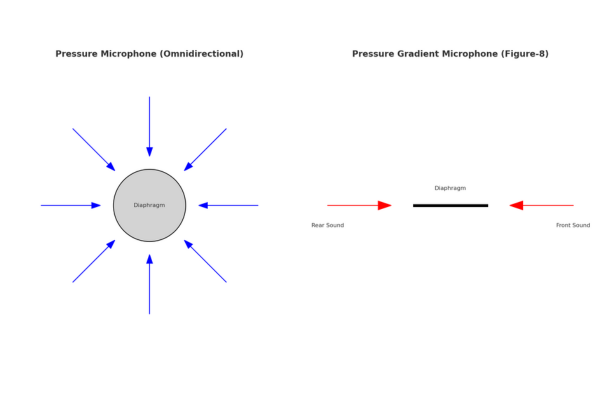
A pressure microphone measures the absolute sound pressure at its diaphragm. The diaphragm is sealed at the back, meaning sound only reaches it from the front side.
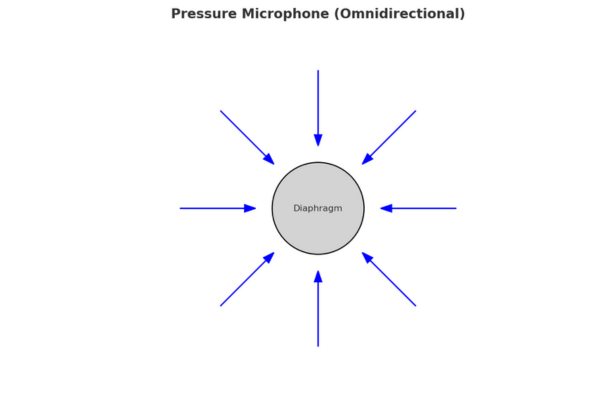
Polar Pattern: Omnidirectional (responds equally from all directions).
Response: Flat low-frequency response since the diaphragm reacts to pressure changes, not particle motion.
Sensitivity to Placement: Less affected by distance and room reflections compared to gradient types.
Applications:
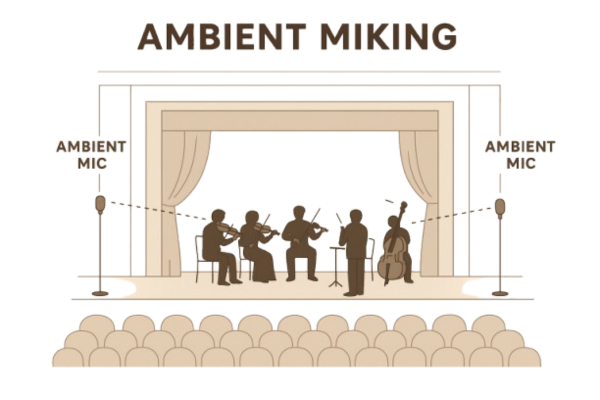
Ideal for capturing room ambience.
Common in lavalier mics, measurement mics, and situations where a natural sound is desired.
How Pressure Microphones Work
The diaphragm in a pressure microphone moves in response to changes in air pressure. When sound waves hit the diaphragm, they create pressure variations that cause the diaphragm to vibrate. These vibrations are then converted into electrical signals. Since the microphone only “listens” to pressure at one point, it picks up sound equally from all directions.
Key Characteristics of Pressure Microphones
Omnidirectional polar pattern: Captures sound equally from all directions (360 degrees)
Consistent frequency response: Maintains uniform sensitivity across different angles
Natural room sound: Captures ambient acoustics and reverb effectively
Less sensitive to wind and handling noise: The sealed design provides some protection Proximity effect resistance: No significant bass buildup when sound sources move closer
What is a Pressure Gradient Microphone?
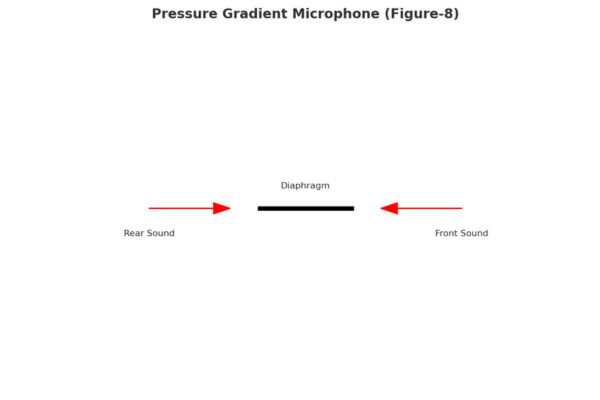
A pressure gradient microphone measures the difference in pressure between the front and back of its diaphragm. The back of the diaphragm is open, allowing sound to reach from both sides.
Polar Pattern: Figure-8 (bidirectional), cardioid, or hypercardioid, depending on design.
Response: Strong proximity effect (bass boost when placed close to the source).
Sensitivity to Placement: More directional, making it suitable for isolating sources.
Applications:
Used in vocal recording, studio environments, and stereo techniques like Blumlein and Mid-Side.
Great for rejecting off-axis sound and focusing on a subject.
How Pressure Gradient Microphones Work
In a pressure gradient microphone, sound waves reach both sides of the diaphragm through carefully designed acoustic pathways. The microphone responds to the pressure difference between the front and back of the diaphragm. This design creates directional sensitivity, as sounds arriving from different angles will create different pressure gradients.
Key Characteristics of Pressure Gradient Microphones
Directional polar patterns: Can be cardioid, hypercardioid, or figure-8
Superior source isolation: Excellent at rejecting unwanted background noise
Proximity effect: Bass response increases as sound sources move closer
Variable frequency response: Sensitivity changes based on the angle of sound arrival
More sensitive to wind and handling: The open design makes them more susceptible to mechanical noise
Key Differences at a Glance
| Feature | Pressure Microphone (Omni) | Pressure Gradient Microphone (Figure-8) |
| Sound Principle | Measures absolute pressure | Measures pressure difference |
| Polar Pattern | Omnidirectional | Bidirectional / Directional |
| Proximity Effect | None | Present (bass boost close-up) |
| Low-Frequency Response | Flat and accurate | May roll off without proximity boost |
| Applications | Ambience, measurement, lavaliers | Vocals, instruments, stereo techniques |
Frequency Response Considerations
Pressure Microphones
Pressure microphones typically offer flat, consistent frequency response regardless of the sound source’s position. This makes them ideal for capturing the natural tonality of instruments and voices without coloration.
Pressure Gradient Microphones
The frequency response of pressure gradient microphones varies with distance and angle. The proximity effect can add warmth and intimacy to close sources, while the directional nature can help shape the tonal balance by rejecting off-axis sounds that might muddy the recording.
Which One Should You Choose?
Choose a Pressure Microphone if you need a natural, balanced recording that captures the environment (like room ambience or live performances).
Choose a Pressure Gradient Microphone if you want directionality, vocal presence, or need to reject background noise in a controlled setting.
Conclusion
Both pressure and pressure gradient microphones are essential tools in audio production. Pressure microphones excel in capturing realistic, open soundscapes, while pressure gradient microphones provide directionality and control. Understanding these differences allows you to make the right choice depending on the recording situation, ensuring clarity and accuracy in your audio projects.