
In audio post production, capturing sound with precision is the foundation of a professional mix. One of the most critical factors that influence how a microphone responds to sound is its polar pattern. A microphone’s polar pattern describes its sensitivity to sound from different directions, shaping how it captures the audio environment. For sound designers, dialogue editors, and mix engineers, understanding polar patterns is essential to make informed choices during recording and post production.
Table of Contents
What Are Microphone Polar Patterns?
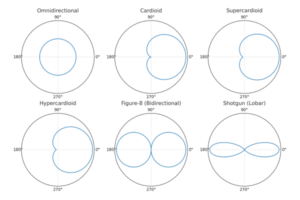
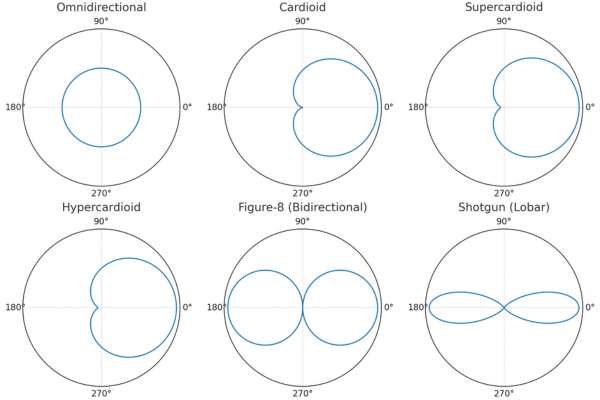
A polar pattern (also called a pickup pattern) defines the directionality of a microphone — how it responds to sounds from the front, sides, and rear. By visualizing these patterns on a graph, audio engineers can predict how a mic will behave in a real-world environment. A microphone’s polar pattern, also known as its pickup pattern, describes the microphone’s sensitivity to sound from different directions. Choosing the right pattern for a specific task can significantly improve the quality of your recordings and simplify the editing process.
Common Types of Polar Patterns
Omnidirectional
Characteristics:
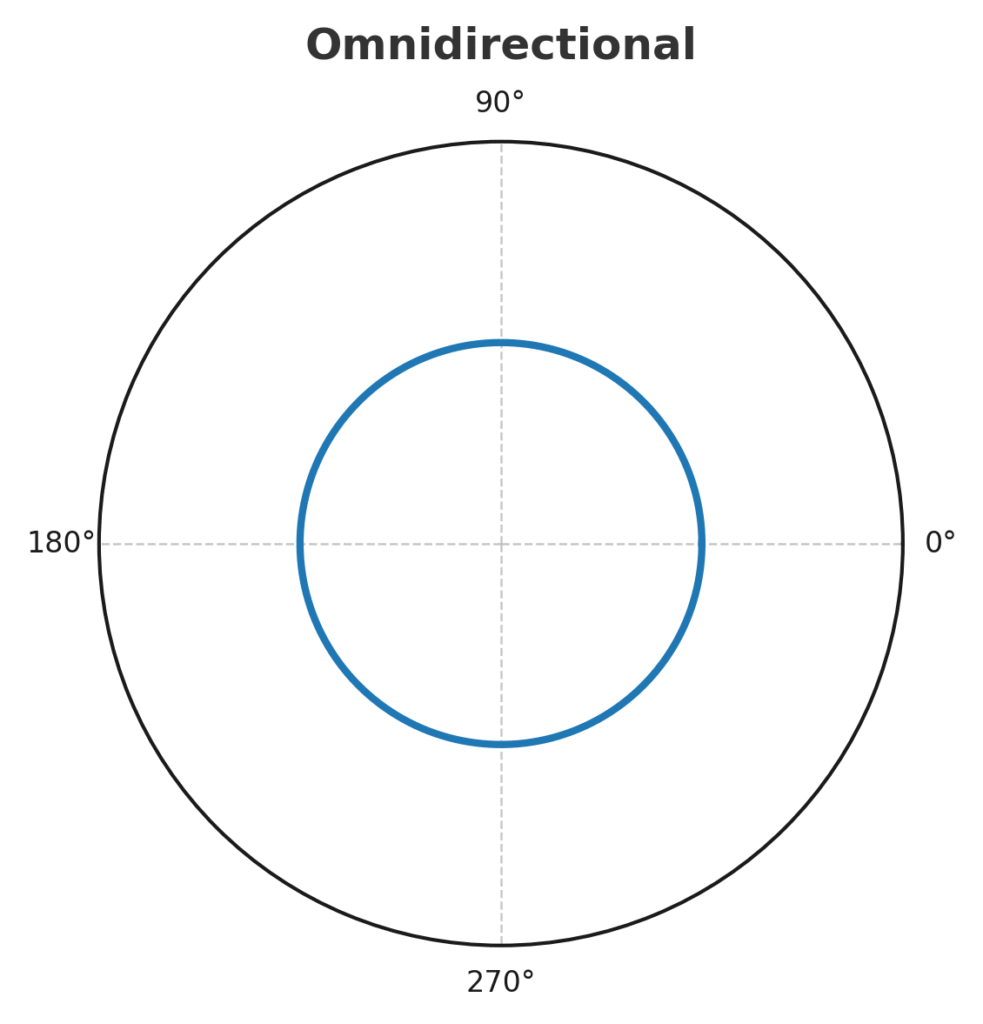
Picks up sound equally from all directions.
Advantages:
Natural sound, excellent for capturing ambience or group performances.
In Post:
Useful when you want to retain room tone or create an immersive atmosphere in film and TV mixes.
Limitation:
Offers no isolation, so unwanted noise may creep in.
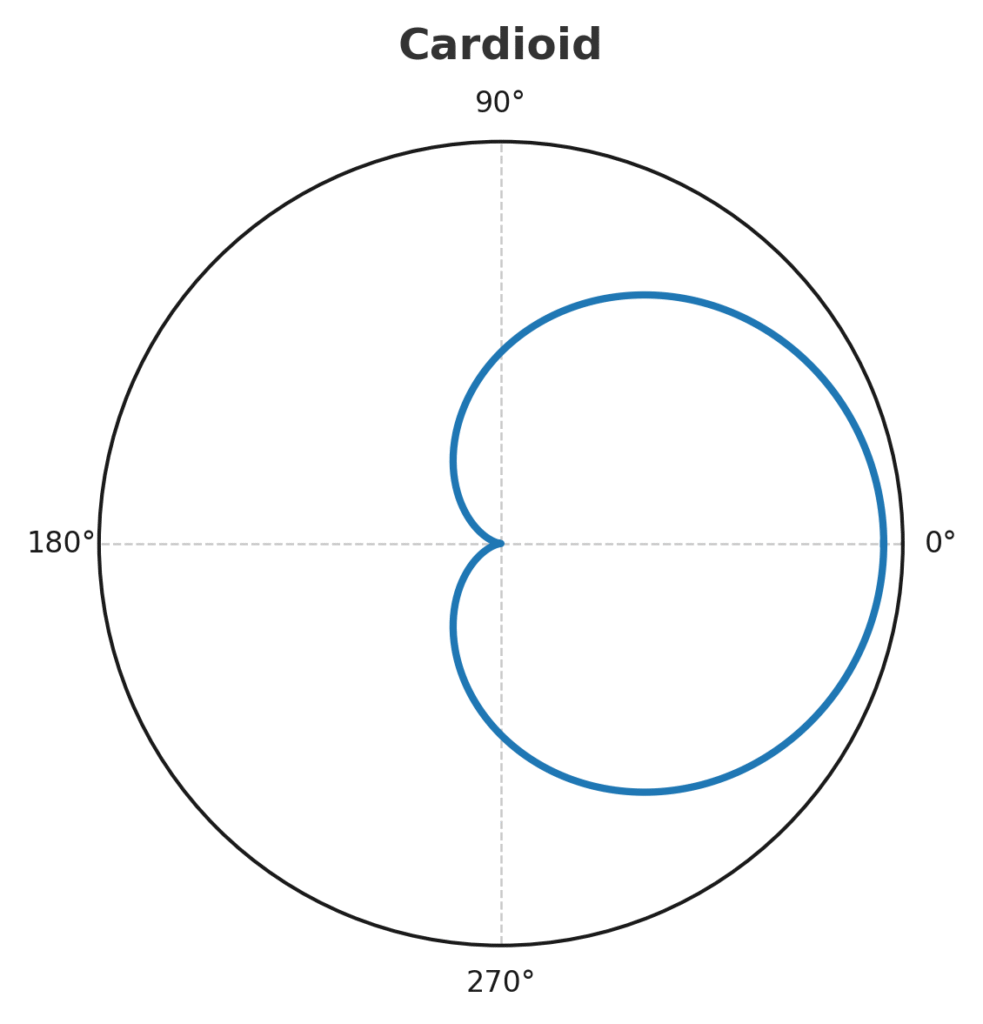
Cardioid
Characteristics:
Heart-shaped pattern, most sensitive at the front, rejects sound from the rear.
Advantages:
Great for isolating dialogue or solo instruments.
In Post:
Preferred in ADR (Automated Dialogue Replacement) and voiceovers to keep the recording clean.
Limitation:
Can suffer from the “proximity effect” — an increase in bass when the sound source is close.
Supercardioid / Hypercardioid
Characteristics:
Narrower front pickup than cardioid, with a small lobe of sensitivity at the rear.
Advantages:
Better isolation and directionality, ideal for noisy sets.
In Post:
Common in boom microphones for film dialogue, as they isolate actors’ voices in uncontrolled environments.
Limitation:
Rear lobe can still pick up some unwanted sounds.
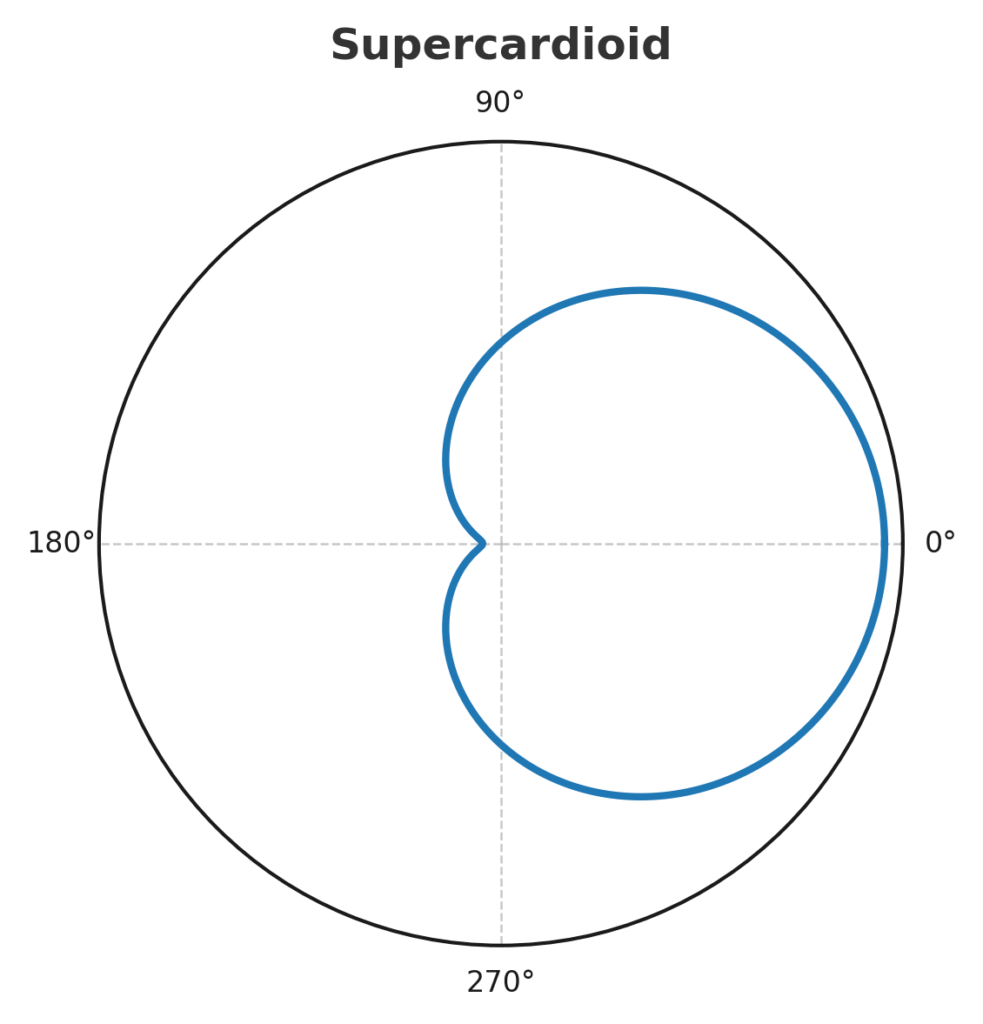
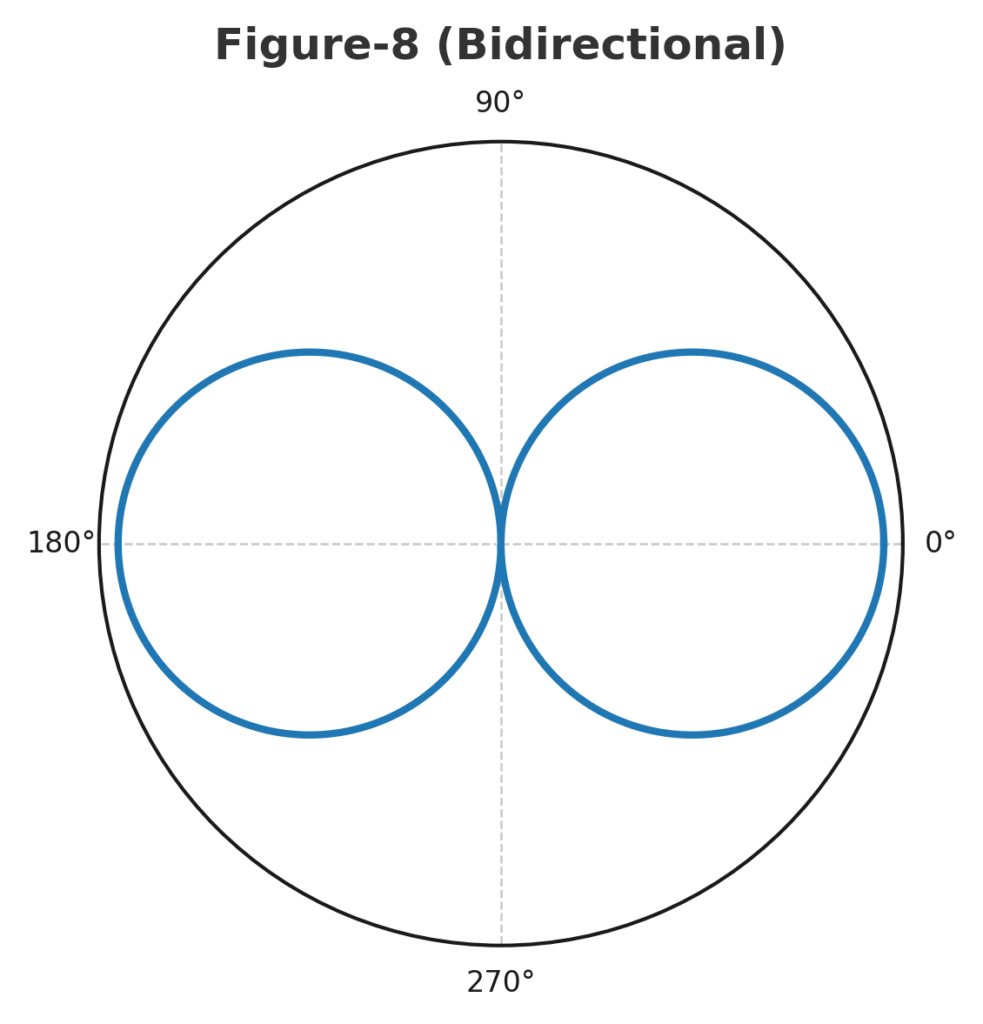
Figure-8 (Bidirectional)
Characteristics:
Sensitive at the front and rear, rejects sound from the sides.
Advantages:
Excellent for two-person interviews or creative stereo recording techniques like Mid-Side (M/S).
In Post:
Provides flexibility in spatial mixing and stereo imaging.
Limitation:
Susceptible to picking up background noise from both front and rear.
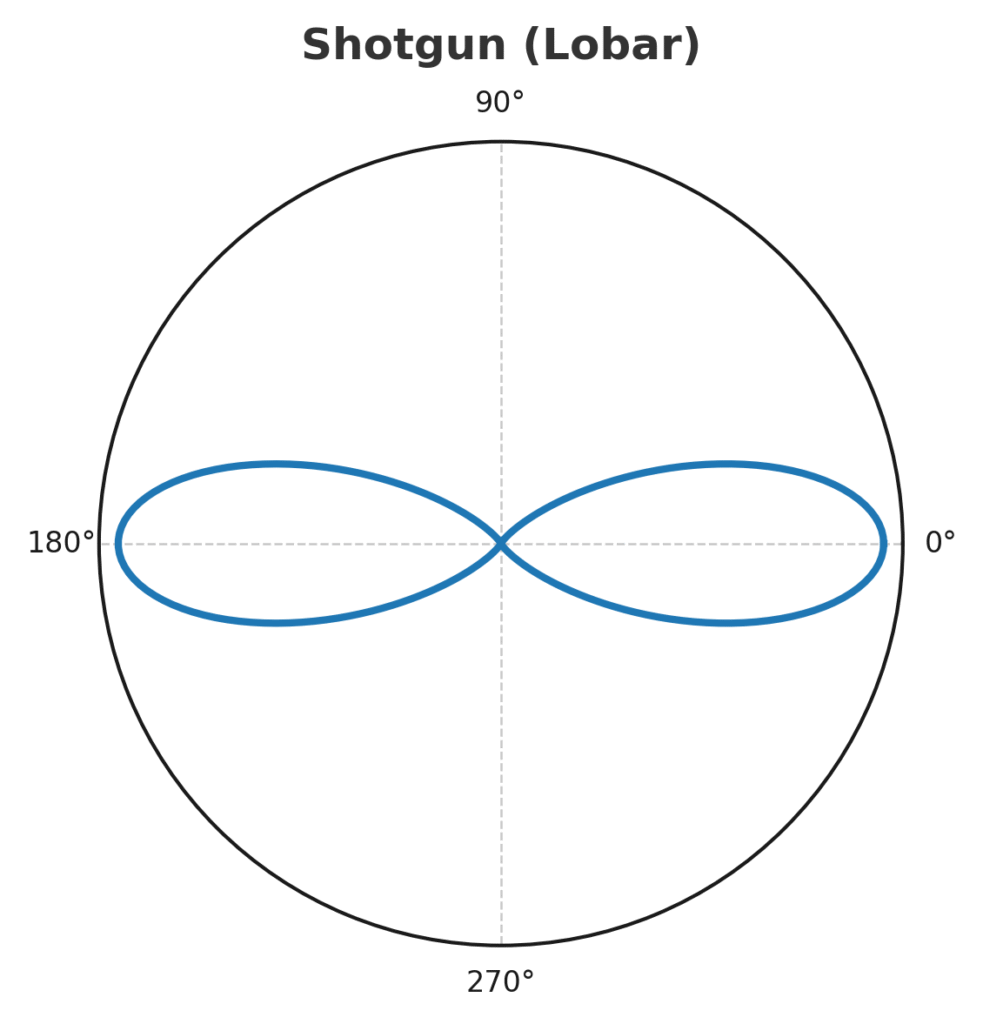
Shotgun (Lobar)
Characteristics:
Extremely narrow pickup pattern with strong front focus.
Advantages:
Excellent for dialogue on film sets, especially outdoors.
In Post:
Provides clean dialogue tracks with minimal environmental noise, saving time in noise reduction.
Limitation:
Can sound unnatural indoors due to reflections.
Why Polar Patterns Matter in Audio Post Production
Dialogue Clarity –
Selecting the right polar pattern ensures dialogue is captured cleanly, reducing the need for heavy processing later.
Noise Control –
Directional mics help minimize environmental noise, making post-cleanup faster and more effective.
Spatial Realism –
Different polar patterns allow sound designers to create depth and realism in a mix.
Flexibility in ADR/ Foley –
Matching polar patterns with production mics ensures consistency and believability in post.
Best Practices for Using Polar Patterns in Post
Match the Mic to the Environment:
Use cardioid indoors, shotgun outdoors, and omnidirectional for ambient capture.
Check Phase Issues:
When combining multiple microphones, mismatched polar patterns can cause phasing.
Experiment Creatively:
Figure-8 and Mid-Side techniques can give post mixers more control over spatial imaging.
Consistency is Key:
Try to match the same polar pattern across ADR and production to avoid tonal mismatches.
How Polar Patterns Impact Post-Production
Choosing the correct polar pattern can make or break your post-production workflow.
Noise Reduction:
Using a highly directional pattern like cardioid or hypercardioid can help you capture a cleaner signal by minimizing unwanted background noise, reducing the need for extensive noise reduction software in post.
Ambience:
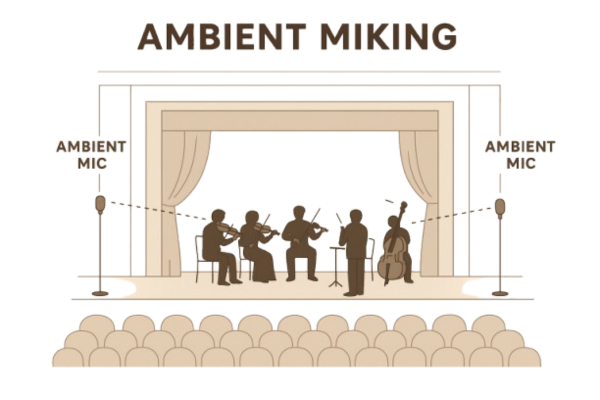
An omnidirectional microphone is perfect for capturing the natural room tone or ambience of a location. This can be crucial for creating a realistic soundscape and seamlessly blending different audio takes.
Stereo Imaging:
Patterns like bi-directional are fundamental to creating powerful stereo sound. By combining it with a cardioid mic in an M-S array, you can create a highly controllable stereo field in post-production.
Conclusion
Microphone polar patterns are not just technical diagrams — they are tools that shape how sound is captured, interpreted, and ultimately experienced by the audience. In audio post production, understanding and using these patterns wisely can mean the difference between a muddy, noisy track and a clean, immersive mix. By choosing the right polar pattern for the task, audio engineers set themselves up for smoother post workflows and more impactful soundscapes.